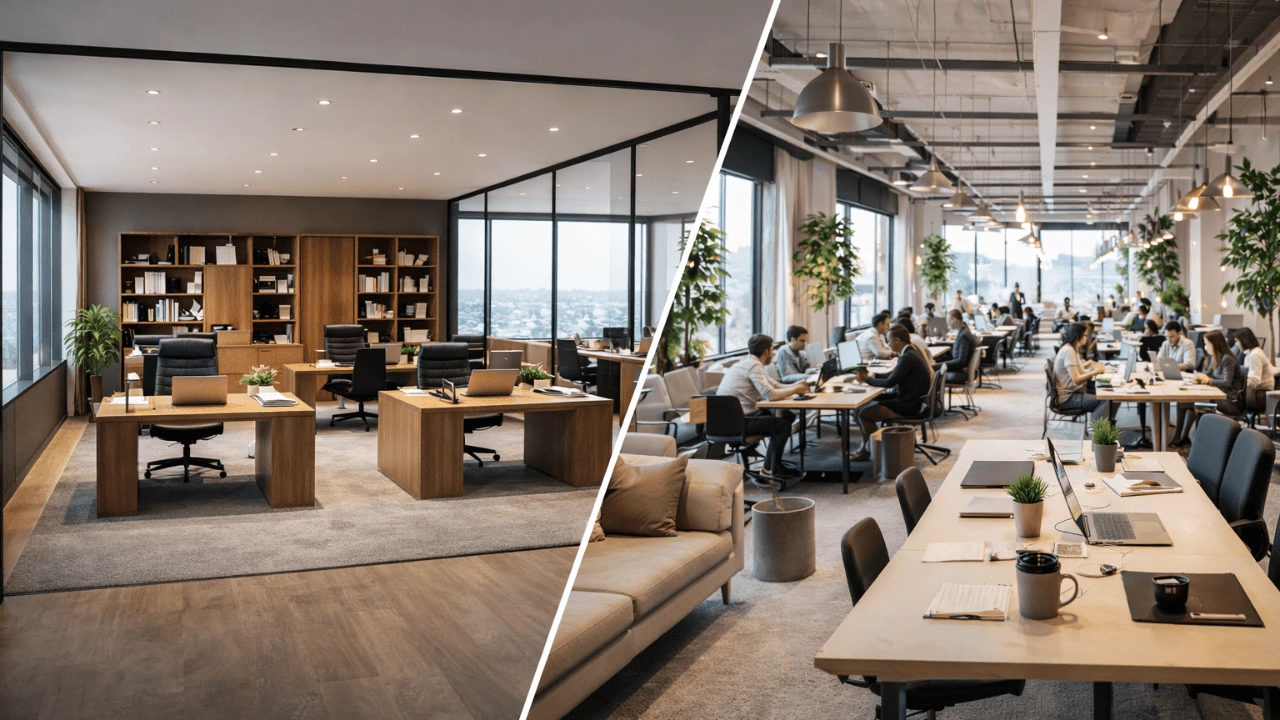
Coworking had a clear promise: turn up with a laptop, meet people, and get work done without the hassle of a lease. For many freelancers and early-stage teams, it still does exactly that. But a quieter shift is happening among consultants, legal and finance teams, recruiters, and client-facing specialists.
They are not "anti-coworking". They are just tired of doing serious work in spaces designed for constant movement, noise, and shared rules that change week to week. When your job depends on privacy, reliable calls, and polished client meetings, the trade-offs start to bite.
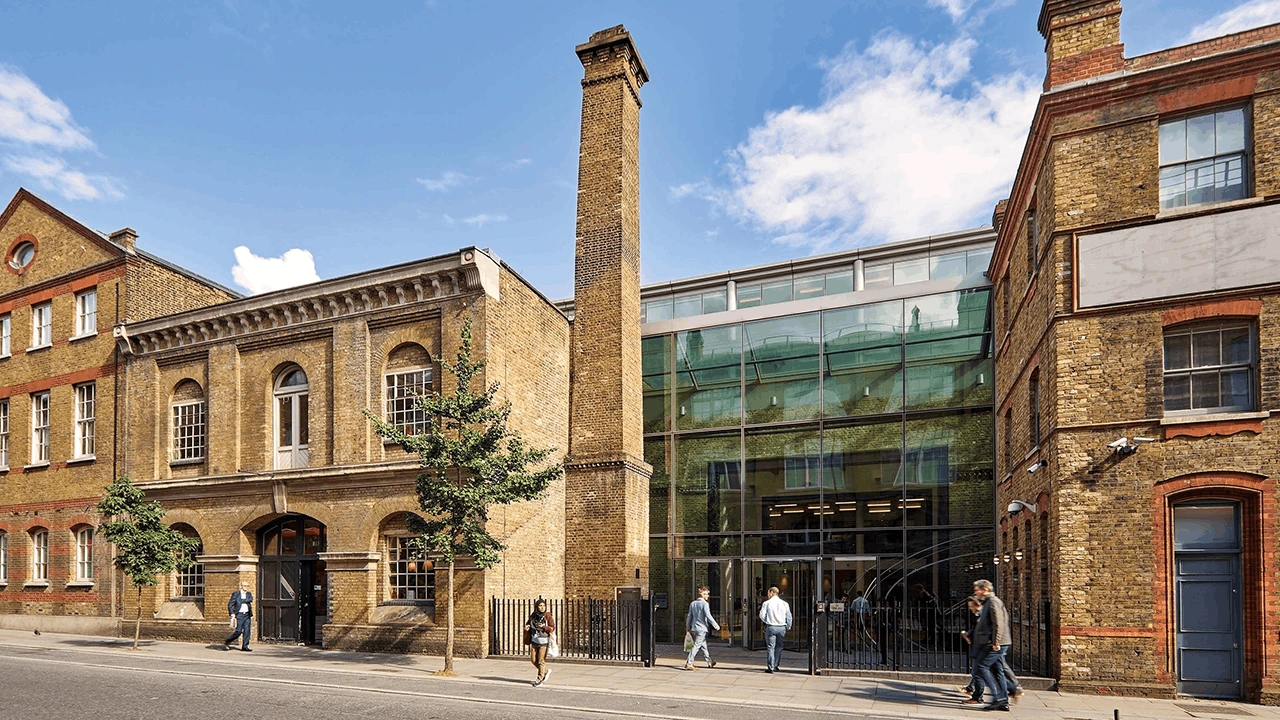
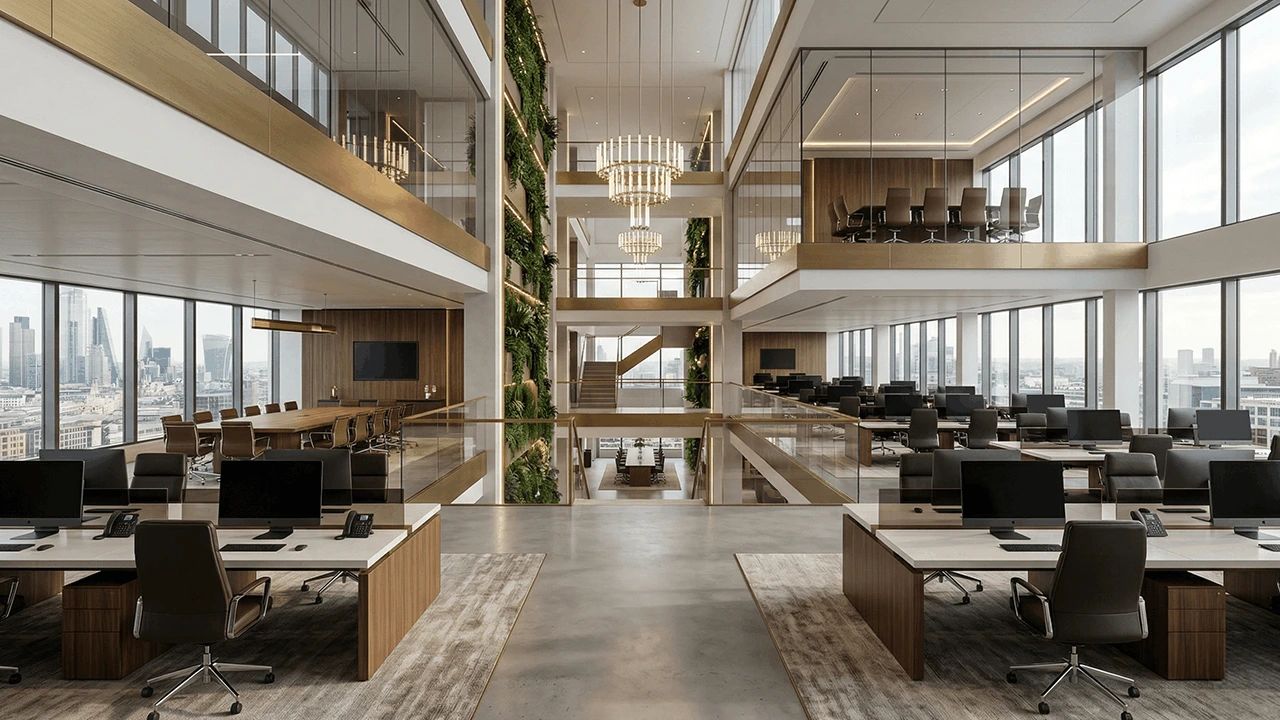
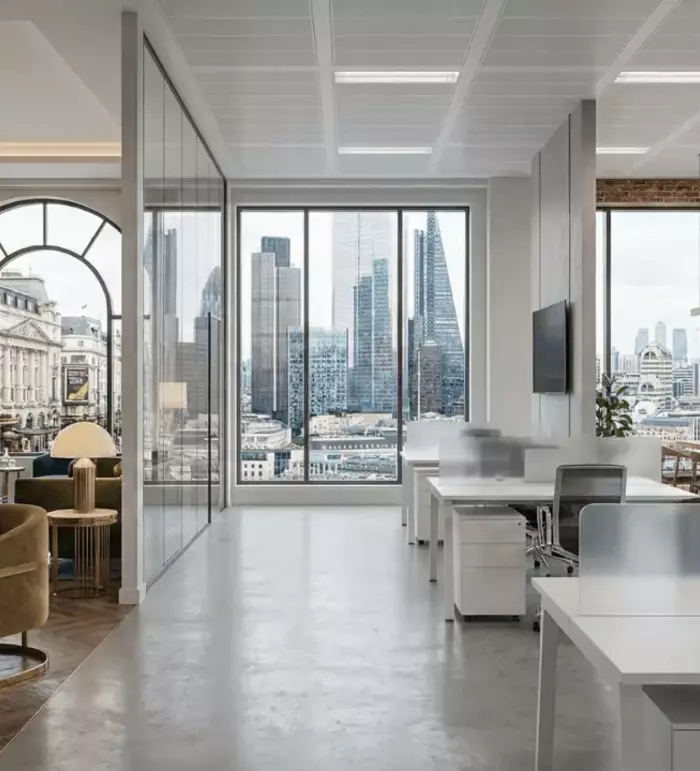
If you are exploring options in the capital, a quick scan of London office space can help you compare areas, buildings and office styles before you start booking viewings.
Key takeaways
If you are weighing up private office vs coworking, these are the shifts driving decisions right now. The headline is simple: many professionals still want flexibility, but they also need privacy and reliability to do their best work. Once clients and confidential conversations are part of your week, the balance often changes.
Use the points below as a quick sense-check, then read on for the real-world details that underpin each one.
- When your work includes sensitive calls, a door you can close changes everything
- For client meetings, a consistent, polished setup often beats a shared "buzz"
- Reliability becomes non-negotiable when office days are fewer and more high-stakes
- Costs are easier to compare once you factor in meeting rooms, add-ons and time lost
- The best private office vs coworking choice depends on your workload, not the trend
A useful way to think about this is: coworking is built for variety, private offices are built for consistency. When your workload is light on confidentiality and heavy on networking, variety wins. When your workload is heavy on judgment calls, sensitive info, and deadlines, consistency wins.
Hybrid work makes this clearer. You might only be in the office two or three days a week, so you want those days to run smoothly, not feel like a daily reset.
What "proworking" really means and why it's showing up now
"Proworking" describes a professional, private workspace that still offers the flexibility people like about modern operators. It is not about going back to long leases and empty corridors. It is about returning to doors, dependable meeting space, and a working environment built for focus.
A Forbes Business Council piece frames "proworking" as a move towards offices with more privacy and better support for serious work, especially when people have fewer office days and need those days to count. You can see that framing in Forbes Business Council commentary on workplace trends.
This shift is not really about nostalgia. It is about risk and output. When you are advising clients, handling personal data, negotiating contracts, or running performance conversations, the environment becomes part of the job.
That is why many teams are moving towards a private office, often within a serviced or managed building where the basics are taken care of for you. The goal is simple: reduce daily friction while keeping flexibility.
Privacy is no longer a "nice to have"
In many coworking spaces, privacy depends on luck. You might get a quiet corner one day, then sit beside a loud sales call the next. Phone booths help, but they are often booked, busy, or not built for long, high-stakes conversations.
It is not only about noise, but it is also about behaviour. When people feel watched or overheard, they change how they work. Researchers have found that more open layouts can reduce in-person interaction and push people towards messaging, often a sign of "social withdrawal" when privacy feels limited, as described in an analysis shared via Harvard Business Review's workplace research coverage.
A private office does not fix every problem, but it removes one big variable: you control the room. That means you can speak normally on client calls, leave documents on your desk without stress, and hold sensitive chats without scanning the space first.
For many professionals, that change alone is enough to tip the balance in favour of a private office over coworking.
Reliability matters more when office days are fewer
Hybrid work has changed expectations. Many teams now treat office time as "high value time" for collaboration, client meetings, onboarding, or deep work away from home distractions. If you only have a few office days a week, a dodgy connection or an unavailable meeting room is more than annoying; it can break the day's plan.
Workplace bodies have tracked how office use and expectations have shifted, with utilisation patterns changing and occupiers looking for quality over sheer headcount seating. The British Council for Offices is one of the organisations reporting on these changes in how workplaces are used.
This is where private offices inside serviced buildings often perform well. The building team has a direct incentive to keep internet, access control, heating, and meeting room tech working because it is part of the offer, not your problem to chase.
If you want a quick sense of what "all-in" can look like, the Flexioffices overview of serviced office space explains the private office plus shared amenities model in plain terms.
Client-ready beats "cool" when money is on the line
Coworking brand language often leans into "community". That can be great, but it is not always what your clients want to walk into. If you sell legal advice, financial services, recruitment, or anything involving confidential strategy, the space is part of how you signal trust.
Client-ready does not mean fancy. It means predictable. A clean reception, meeting rooms that book easily, privacy for calls, and a space that feels like your business, not someone else's.
When you can host properly, you stop apologising. You start leading.
Private office vs coworking in real life, not in adverts
Most comparisons make coworking sound like a party and private offices sound like a prison. In practice, both can be excellent, depending on what you do and how you work. The better question is: where do you lose time, lose confidence, or take on risk?
That is where cost and value start to separate. A desk price might look cheaper in coworking, but if you are paying extra for meeting rooms, spending time hunting for quiet space, or avoiding certain calls altogether, the "real" cost rises.
To keep this grounded, it helps to think in three buckets: how you work day to day, what you must protect, and how you show up to clients. Those buckets are where the private office vs coworking decision becomes obvious for many professional services teams.
Let's break them down.
Focus, noise and control of your day
Coworking is built around shared space. Even in well-run buildings, you are still sharing kitchens, lounges, phone booths, and sometimes desk areas. If you thrive on energy and like variety, that can be a plus.
But if you need uninterrupted time, coworking can turn into a string of micro-disruptions. It is not always the big stuff; it is the small stuff: searching for a quiet spot, moving for a call, waiting for a room, adapting to whatever vibe the space has that day.
A private office changes that baseline. You can still use shared breakout areas when you want, but your default is calm. For many professionals, that calm is the whole point.
Confidentiality, data and compliance
Confidentiality is not only a "big company" issue. Recruiters handle candidate data. Consultants handle client plans. HR teams handle performance and well-being conversations. Even a two-person business can be dealing with personal and sensitive information daily.
UK data protection guidance makes it clear that organisations should protect personal data with appropriate measures, including physical security where relevant. The ICO guide to data security is a useful reminder that privacy is not only an IT topic.
This does not mean coworking is "non-compliant". It means you need to be more intentional. You may need privacy screens, stricter desk habits, VPN use, and clear rules about calls.
In a private office, many of those risks are reduced because you can control access and visibility far more easily.
Brand, meetings and first impressions
A client meeting is not just an hour on the calendar. It is also the five minutes before, where you set up, greet them, and settle them in. In coworking, that experience can be hit-or-miss depending on the reception setup, meeting room availability, and background noise.
In a private office, you can make a consistent experience. You can keep materials in the room, use the same meeting space each time, and avoid awkward "we just need to wait for this room to free up" moments.
If location is part of that brand story, using a market-wide search helps you avoid settling for the nearest option. Many businesses start by scanning Flexioffices' office space listings in London to compare buildings and areas without committing to a single operator too early.
When clients walk into a space that feels organised and calm, you start the meeting with trust already in the room.
How to choose the right private office setup
Choosing a private office is not only about price per desk. It is about matching the space to your workflow so you are not paying for features you do not use, or missing the ones that keep your week running.
A smart selection process also protects flexibility. The goal is to upgrade your working conditions without locking yourself into the wrong layout or term.
The fastest wins usually come from getting clear on three things: your work patterns, the office model that fits those patterns, and the practical checks that stop surprises after you move in.
Start with how your team actually works, not how you wish they worked.
Start with how your team actually works
Begin with a simple week map. Who needs quiet focus? Who is on calls all day? Who needs to meet clients? Who needs a collaboration space? You are not designing an office for an ideal week; you are choosing for the messy, real one.
Then look at your growth and churn. If you are hiring steadily, you need a plan for extra desks. If you have seasonal peaks, you might need flexible swing space. If you have a hybrid team, you might need fewer desks than people, but more meeting space.
This is also where commute and location matter. A shorter, easier journey can lift attendance and reduce late starts. It is one of the reasons many firms pick transport-led zones rather than the trendiest postcode.
If you want a simple primer on office models before you visit spaces, Flexioffices' guide to serviced, managed and leased offices can help you shortlist with fewer surprises.
Pick the right model: serviced, managed, or flexible lease
Private offices come in different formats, and the right one depends on how much control you need and how much admin you want. The mistake many teams make is choosing a model based on a headline price, only to feel stuck with the wrong level of service.
Serviced offices are often the easiest step up from coworking. You typically get a private, furnished office with building amenities included. It suits teams that want speed, predictable monthly costs, and minimal setup work.
Managed offices usually give you more control over branding and layout while still offering greater flexibility than a traditional lease. They can feel more like "your office", especially for client-facing teams that want their own identity, which is why many growing businesses explore managed office space once hot-desking starts to feel limiting.
Whatever model you pick, do not be shy about asking how the building handles issues. Who fixes internet problems? What happens if the meeting room system fails? How quickly can you add desks? Reliability is part of the product.
A practical viewing checklist you can reuse
By the time you are viewing, you should already know your "must-haves". This checklist is about avoiding hidden friction that shows up after week two, once the novelty wears off. A private office should make your day easier, not just look good in photos.
Try to view at a time that matches your real use. If you are call-heavy in the afternoons, visit then. If your team comes in on Tuesdays and Thursdays, ask what those days feel like in the building.
- Can you close the door and take a call without feeling exposed to noise
- How many meeting rooms exist, and what is the booking process in practice
- What is the internet setup, and is there a clear support route if it drops
- Is access control simple for staff and visitors, including after hours
- What is included monthly, and what are the common extras people forget
- Can you add desks or adjust the layout without restarting the whole deal
- Is there a reception experience you would feel happy bringing a client into
- Are there quiet areas outside your office for focused work or private chats
After the viewing, do not rush into "yes" because the space is pretty. Go back to your week map and check whether the space supports the work you are paid to do. A private office is only worth it if it consistently removes friction.
It also helps to ask for a clear, written summary of what is included, what is optional, and the move-in timeline. Speed matters, but clarity matters more, because unclear terms are where budgets get messy.
Keeping the upside of coworking without the downsides
One fear people have about leaving coworking is losing community. That is real, especially if you built relationships through the space. But moving into a private office does not mean working in isolation; it means choosing community on purpose.
Many private office buildings still have shared lounges, kitchens, and events. The difference is that you can step away when you need to focus or for a confidential chat. You control when you are social, rather than being social by default.
A practical approach for hybrid teams is to keep "community time" scheduled, not accidental. Use one or two days for shared lunches, internal sessions, or networking, and keep other days protected for deep work.
That way, you get the best bits of coworking without paying for the distractions that can come with it.
How Flexioffices helps you move faster and with less risk
If you are comparing private office vs coworking options, the hard part is not the ideas, it is the legwork. You need a shortlist that fits the budget, location, privacy needs, and growth plans, without wasting weeks touring spaces that were never right.
Flexioffices supports this process by helping businesses compare flexible offices across the market, then narrowing down to options that match how you work. If you want to understand how that support works, the Flexioffices team page explains the approach and the types of help available throughout the move.
If you are ready to switch, a good next step is simple: write down your non-negotiables, then book viewings that match them. When you find the right space, move quickly, but only after the basics are clear.
Conclusion
The rise of "proworking" is really the rise of professionals protecting their time, privacy, and reputation. If your work depends on reliable calls, confidential conversations, and client-ready meetings, moving from coworking into a private office is often a practical upgrade, not a luxury.
If you are weighing up private office vs coworking right now, focus on the friction you feel each week. The right space is one that consistently removes that friction, while still keeping your costs and flexibility under control.
FAQs
Is a private office always more expensive than coworking?
Not always, because coworking costs can rise once you add meeting rooms, extra days, and the time lost to disruptions. The fair comparison is total monthly cost plus the value of reliability and privacy for your work.
What is the simplest private office option if I am leaving coworking for the first time?
A serviced private office is often the easiest first move. You get your own room with a door, while still using shared amenities, and you avoid the heavy lift of setting up an office from scratch.
How do I protect confidentiality if I must stay in coworking?
Start with basics: avoid discussing sensitive details in open areas, use privacy screens, keep documents off shared tables, and treat calls like meetings by booking an enclosed space. If you handle personal data, align habits with the ICO's data security guidance so the physical setup supports your policies.
Can a private office still work for a hybrid team?
Yes, but you should design for how often people come in, not headcount alone. Many hybrid teams choose fewer desks than people and prioritise meeting rooms, collaboration space, and a strong video call setup.
What should I prioritise if clients visit often?
Put reception experience, meeting room quality, sound control, and location near transport at the top. A client-ready space reduces friction and helps your business feel trustworthy before you even begin the meeting.